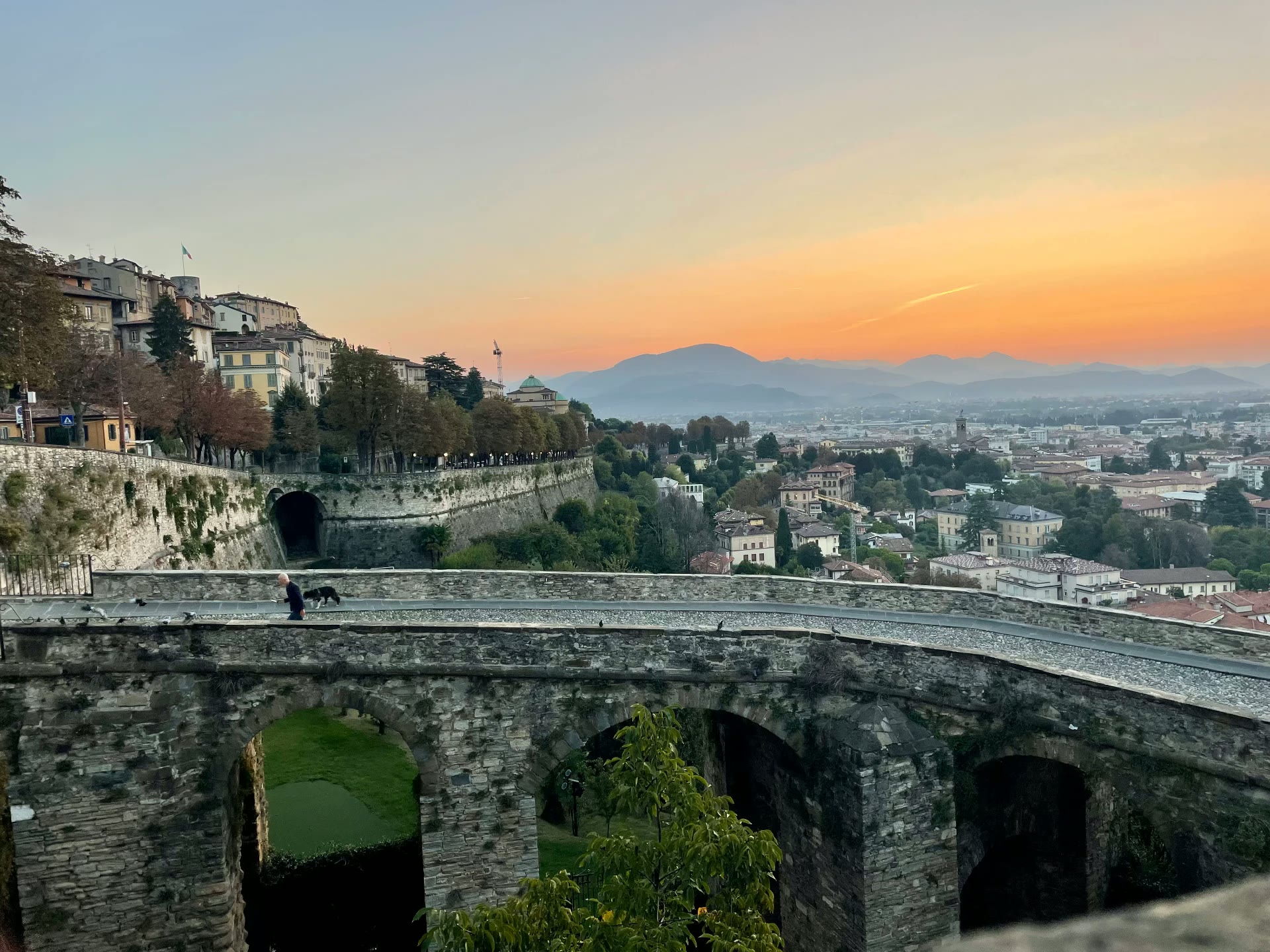
For women deciding whether to move their family to Italy
You can picture the life in Italy.You just can't decide if it's the right move.
You can research Italy for years and still miss the questions that matter most.
A private space to explore whether Italy could be your next chapter.
I've made the move myself, and now work closely with expats on the other side of it. I've seen what makes the transition work, what catches people out, and what they wish they'd known sooner.
The Italy Question doesn't just clarify the decision, it builds the woman before the move, equipping her with the self-awareness, local knowledge and network to land with confidence, whatever she decides.
I wish I had known...
I see you. It's late, probably past midnight, and you're still awake with twenty tabs open, reading other people's answers to a question that is entirely your own: should we actually move our family to Italy?
You've read the blogs, saved the Instagram posts, joined the Facebook groups. You've asked about schools, visas, healthcare, houses, taxes, jobs, language, bureaucracy and where the other English-speaking women are. And somehow, the more you research, the more complicated the decision feels.
I know that woman, because I was her. I stayed up until 2am too. I over-analysed at an Olympic level. I researched everything I could possibly research. And I still got significant things wrong.
Here's what nobody says out loud: the confident voices telling you how to move to Italy online have got plenty wrong too. They just don't post that part. Being loud on social media isn't the same as being qualified to sit with you through a decision this size. That's a different craft entirely.
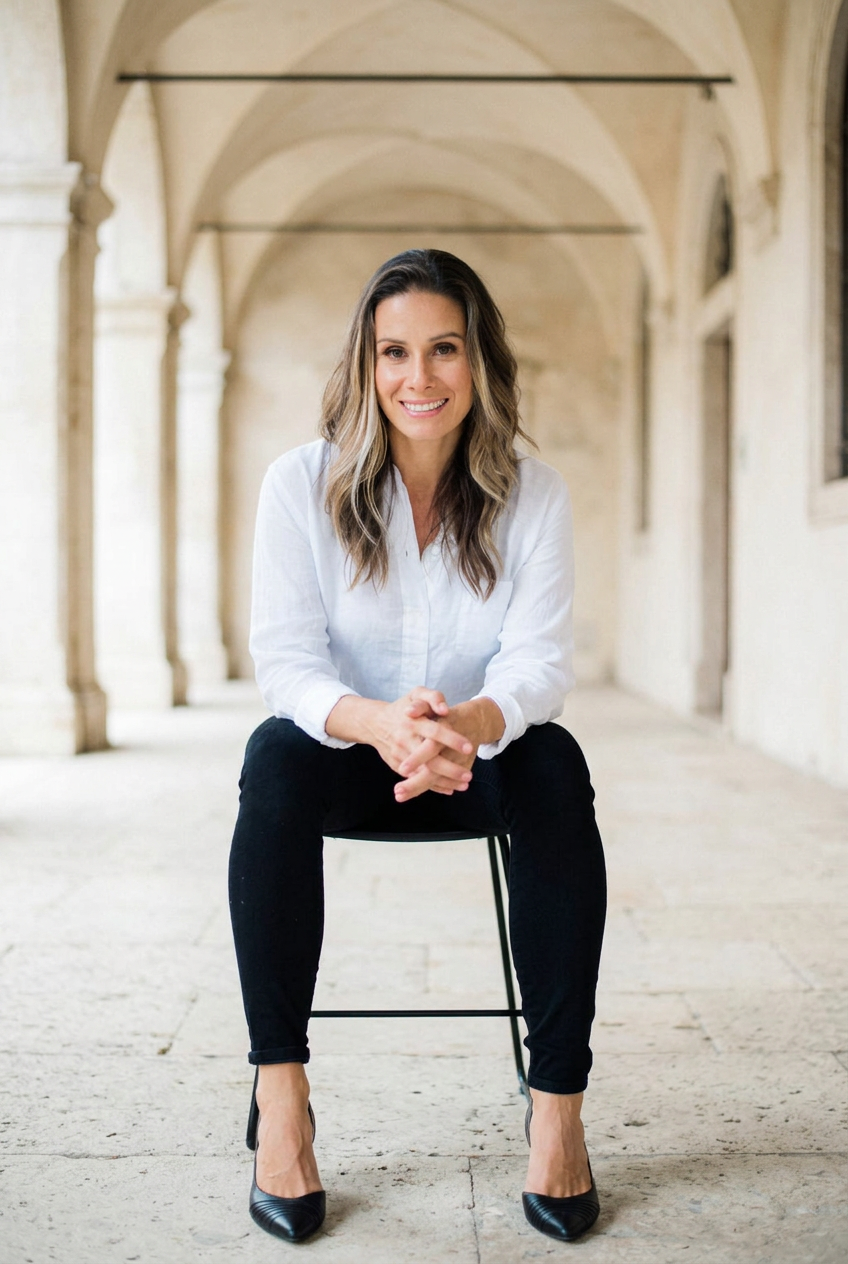
Let me introduce myself.
I grew up between two cultures: Italian at home, Australian at the school gate, and completely at home in both while feeling ever so slightly foreign in each. It's been one of the great gifts of my life: being culturally fluent in two places I love deeply. I had the 90s Italo-Australian version of daycare, my Nonna Stefania, strong as an ox, who by the time I was six had taught me to make gnocchi, tend the veggie patch and catch my own chicken for lunch. They don't make them like that anymore.
I was 21 when I first fell in love with Italy. No Instagram, no AI itineraries, just my mum, me, a rough plan and a bucket list. It changed me forever. My body felt healthier, my nervous system reset for the first time in years. My body knew long before my mind did. I'd fallen completely in love, not just with the beauty, but the slower rhythms, the ancientness, the contradictions, the way Italy keeps evolving while refusing, in so many ways, to bow to modernity. Stone over steel, traditions over trends, towns over towers, food over fads.
Eventually, I stopped visiting. I moved here from Australia to Italy with my three children, leaving what from the outside looked like a pretty perfect and abundant life in Sydney to build something completely different.
And I thought I was equipped. For twenty years I'd guided people through significant crossroads: as an educator, a therapist by training, an executive and leadership coach, and a Human Design practitioner. I knew how to research. I knew how to make decisions. I knew how to assess risk. I did all the research. And it still cost us six figures to learn what nobody had told us to ask.
That's the part I wish someone had told me: you don't know what you don't know.
Because our move wasn't the classic expat story. We didn't have an Italian husband who'd grown up down the road. We didn't buy a cheap rural ruin and romanticise the restoration. We didn't choose a city with a ready-made English-speaking community waiting to catch us. We started with a blank canvas. We had to rebuild almost everything, and make peace with the things that couldn't be rebuilt, replaced or replicated on the other side of the world.
Some families arrive in Italy on the strength of one magical summer. Others spend years researching, planning and preparing before they make the leap. I was the latter. And I still got important things wrong.
That experience fundamentally changed the way I see this decision. Because moving your family to Italy isn't just a relocation, it's a life decision. And the questions that matter most aren't always the ones you'll find by Googling "how to move to Italy." They're the questions underneath the questions: the ones you don't yet know you need to ask. The things you need to understand about your family, your finances, your expectations, your children, your identity, your relationships, your tolerance for uncertainty, and the version of life you're actually trying to build.
That's why I created this membership. Not to convince you to move to Italy. Not to sell you the dream. And not to tell you everything will work out beautifully if you just take the leap. I want you to make an informed decision, one that is genuinely yours.
Because if this goes wrong, everyone will be very kind about it. You'll still know whose idea it was.
But done with your eyes open, asking the questions that actually matter, this can be the best decision your family ever makes. I've watched it happen. I've lived it. That's what I'm here for: not to talk you into it, or out of it, but to help you choose with clarity, and to walk toward your version of la dolce vita knowing it's truly yours.
— Tania
I live here, so I hear the other half of the story.
Almost always in the same quiet voice, and almost always starting with “if I'd known.”
The couple who came for his job and her fresh start. Eighteen months in she had no work, no language and no friends of her own, and a marriage that had turned into a negotiation over whose idea this was.
The family who budgeted for the house and the school fees. Nobody budgets for the second year. The renovation tripled, the income didn't transfer, and ten years of savings went in two.
The mother of four who was ready to leave Italy. Four different children and very different needs, she couldn't see how to make family life work here. Then she found me. We built a team around the family and found a way forward for each child. They stayed. The children are thriving and never want to leave Italy.
None of them were reckless. They had all done the research. Not one had been asked the question that would have changed things.
What you get as a member.
- 01Live group sessions, online, recorded if you can't make them.
- 02Hot seats, where you bring your real decision into the room.
- 03Private one-to-one time with me, for what you won't say in a group.
- 04Each Child, Separately. A review of each of your children in turn: their age, their temperament, and what this particular move asks of that child specifically. Not “the kids” as one unit.
- 05Live sessions with experts on schools, property, visas, tax and the real differences between regions. You ask, they answer.
- 06Introductions to the specialists I'd trust with my own family, once you've decided.
Three steps, and the first one is a conversation.
Apply to join The Italy Question. The form is short and I read every one myself.
Book a 90 minute 'Crossroads Conversation™'. Until now you've done all this in private - researching anonymously, saved posts and secret tabs, perhaps your family doesn't know yet. This is where you can stop being anonymous. You can ask the questions that are actually about you and your family, not the generic ones a forum answers for everyone. And you'll start to learn which questions are the ones that make the whole decision clearer. (€220.)
Join the private membership. If it's right for both of us. €149 a month, minimum three months, then month to month until you feel confident in your decision and action plan. This is a comprehensive decision process, not an event.
Tell me where you're up to.
The application is short on purpose, and I read every one myself.
What does it cost?
The ninety-minute conversation is €220. If it's right for both of us, membership is €149 a month, with a three-month minimum, then month to month.
What are your qualifications?
Degrees in education and applied psychology, training in clinical hypnotherapy and strategic psychotherapy, an ICF executive coach, and trained in Human Design — with twenty years using all of it, in organisations and one to one with adolescents and women in midlife. But the letters matter less than what they're for: I've spent a career learning how people are built and how they decide. That's what I bring to your decision.
Do you tell people whether to move?
No. You will decide, and you'll do it yourself. What I teach is the method, and how to use your own authority within it empowered with insights, a solid question framework for your research and a network to lean into.
Is it too soon, or too late?
Neither. If you've already chosen a region, we test the plan you have while there's still time to change parts of it. If you're at the very beginning, that's a good outcome too. Some of my most useful sessions have been with families who'd already booked the flights.